Taking My Tuxedo Cat to the Grocery Store Changed Me — Here's the Story
Retired and Realizing
Taking My Tuxedo Cat to the Grocery Store Changed Me — Here's the Story
By Geezell · RGC by Geezell · Retired and Realizing
It was a Wednesday. My partner was home working, deep in a meeting, and Wolff was doing what Wolff does when he wants something and isn't getting it fast enough — hollering. Pacing. Being a full-on nuisance with four paws and a tuxedo.
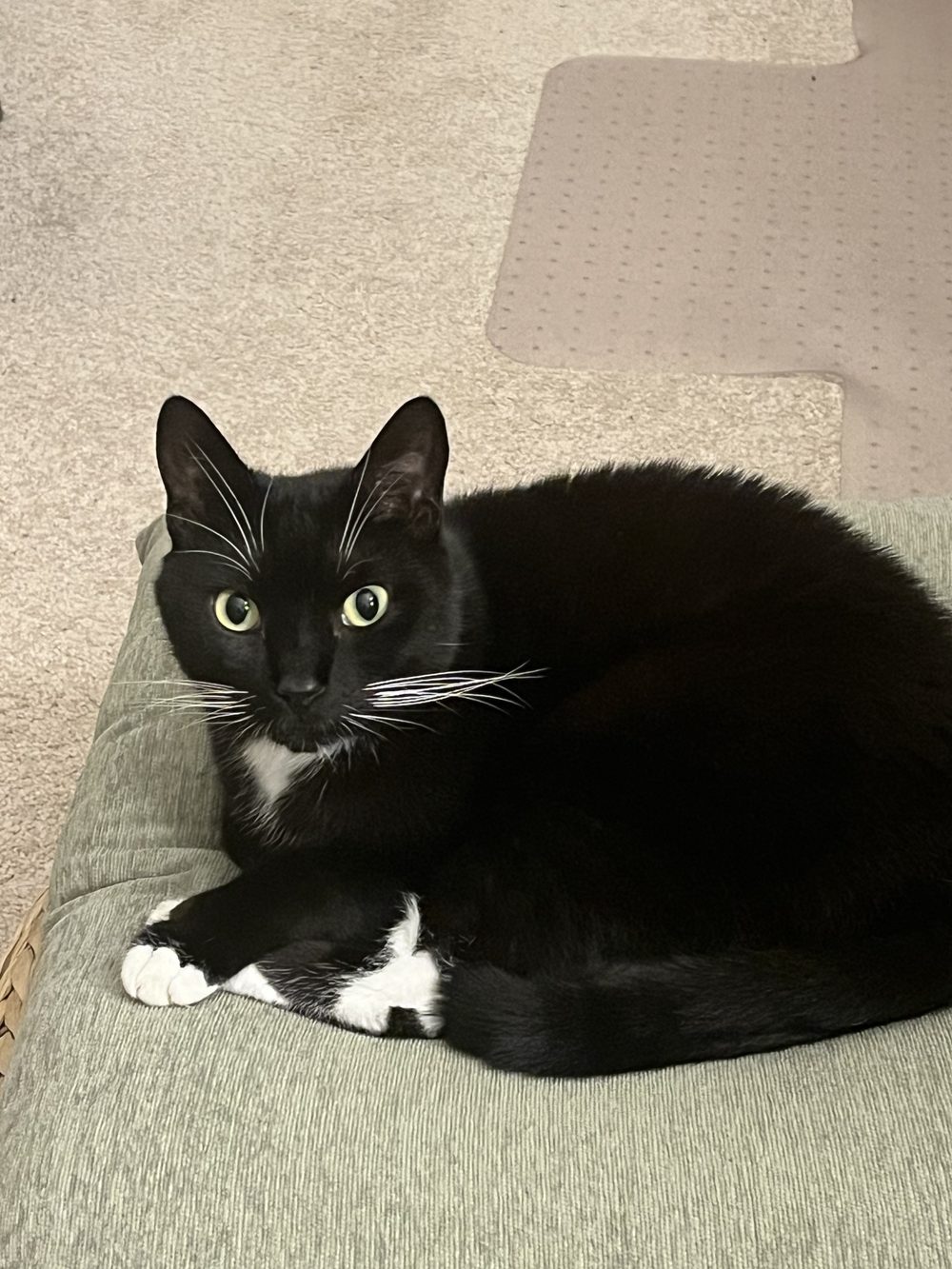
She called out from her office: "Babe, come get Wolff."
I looked at him. He looked at me. And I said, "Come on, let's go out, man."
I didn't know it at the time, but that Wednesday — that hollering, that impromptu trip to the neighborhood supermarket — was the beginning of something I hadn't expected. Something I didn't even know I needed.
Wolff did.
The Grocery Store That Changed Everything
I've been in my community for decades. I've been going to that same neighborhood supermarket for years. People knew my face. I knew theirs. We'd exchange the standard nod, maybe a "how are you," and keep moving.
That day was different.
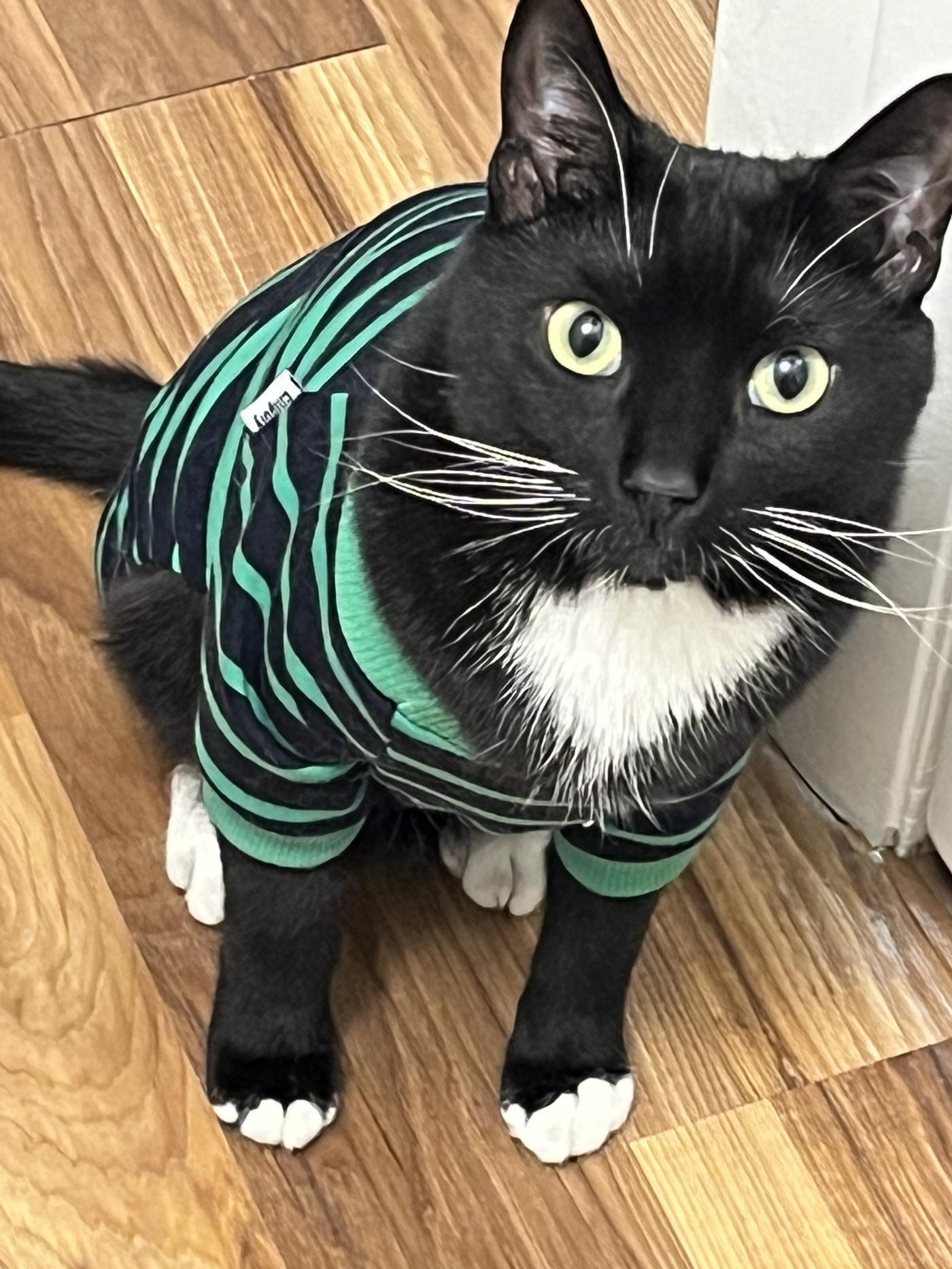
The moment people noticed Wolff sitting in his backpack on my back — head out, eyes wide, taking in the world like he owned every square foot of it — something shifted. Strangers who had never opened their mouths to me before suddenly had things to say. The male staff from the meat market section came from BEHIND the counter. Came around just to get a closer look.
"Oh my goodness — not only a cat, but a TUXEDO cat. I have two myself…"
And the ladies? They melted. Completely.
And Wolff? He appeared to be enjoying every single minute of it. Unbothered. Performing. Completely in his element.
I stood there thinking: "Wow."
He closed a huge gap for me that I'd had for years with my community.
What Was Really Going On
Here's what I need you to understand. When that first grocery store trip happened, I had not yet retired. I was still working in public service. I was still — in every way that matters — guarded.
If you've spent any significant time in corrections, in law enforcement, in public service, you know exactly what I mean by guarded. It's not a mood. It's not a personality flaw. It's a survival mechanism that the job builds into you over years and decades. You learn to read rooms, not open up in them. You learn to assess people, not lean into them. You keep your cards close. You stay controlled.
That's the job. That's what it demands of you.
And after 26-plus years of that — even when I was off the clock, even at the neighborhood grocery store — that guardedness came with me everywhere I went.
I spoke to people when I was out. I was pleasant. But there was a wall. A layer. A professional distance that I had been carrying so long it stopped feeling like a choice and started feeling like just — me.
The Part Nobody Warns You About
This is one of the things nobody tells you before you walk into a career in corrections or public service, and nobody tells you when you're inside of it either.
The job doesn't just change what you do. It changes how you move through the world.
The hypervigilance is real. The emotional containment is real. The habit of not letting people fully in — especially people you don't know, people who haven't earned that access — that becomes a default setting. It protected you inside the walls. But it follows you out.
You can be standing in a grocery store — perfectly safe, perfectly fine, nowhere near a facility or a uniform — and still be operating in that guarded mode. Still scanning. Still managed. Still holding people at a comfortable, professional arm's length.
I had been in my community for decades and there was still a gap. Between me and the people around me. Between the version of Geezell who showed up in the world and the version who had been packed away, waiting for the career to be over.
Correctional professionals don't just retire from a job. They retire from a whole way of being in the world.
And Then There Was Wolff
My tuxedo cat Wolff has a particular energy that I can only describe this way: this is his world, and when the lights are on, you don't even have to say action. He starts performing automatically.
He is confident. Unbothered. Fragrant — my partner keeps beautiful scents throughout the house so Wolff always smells amazing, and people comment on it every single time. He is the cutest little thing. And he has this quality that I can't fully explain, where the moment anyone notices him — whether he's peeking out of his backpack at the grocery store or riding shotgun through a drive-thru — they completely lose sight of what they were doing.
They forget the produce section. They forget the counter. They forget their job. They just come over.
And in coming over to Wolff, they came to me.
And something I had been holding for years — that guardedness, that distance, that professional wall — started to soften.
Because you cannot stand in a grocery store while a man who once would have made the hair on the back of your neck stand up — tattoos, that look, that energy — suddenly lights up like a kid on Christmas morning talking about his tuxedo cat named Biscuit who sleeps on his pillow every night. You cannot witness that and stay fully armored. It doesn't work that way.
Twenty-something years in public safety teaches you to read a room, read a person, and keep your walls up while you do it. You learn to see the exterior and respond to it. That training doesn't just clock out when you do.
But Wolff didn't get that memo.
Because out here — outside those walls, outside that context — the same man who once represented tension and unpredictability is just a guy in the cereal aisle who misses his cat. And when he tells you about her — how she waits by the door, how she chirps at him in the morning, how she picked him and not the other way around — there is nothing left to guard against. The armor has no assignment. So it falls.
That's what a tuxedo cat does. Not just to you. To everyone. They have always known something about people that people are still figuring out about themselves.
The Best Buy Moment
Wednesdays became our day. Wolff and I, out in the world together. The neighborhood supermarket became a regular stop. But the moment that really got to me happened at Best Buy.
I had a problem with my laptop and went to see the Geek Squad. Two guys working the desk. When they noticed Wolff, they completely forgot the laptop existed.
One of them pulled out his phone and started showing me pictures. His girlfriend loves cats. She has a tuxedo cat. He wants to get another one. His coworker was pulling out pictures too — showing me the cats his girlfriend has at home.
These two guys, at work, in the middle of a shift, just completely forgot where they were. Because Wolff walked in.
And I'm standing there watching it happen, thinking: this cat is doing something I had stopped doing for myself. He's making people human with each other. He's dissolving the distance.
He was doing it for them. He was doing it for me.
Wolff unlocked the part of me that I had reserved, put on the shelf, until I finished my career in public safety.
Being Able to See People Again
That's the part that cracked me open. Not just the conversations. Not just the warmth. Not just the strangers becoming neighbors in the grocery store aisle.
It was that through all of it, I was able to really see people again. And be human again.
Twenty-six years in corrections will do something to the way you see the world and the people in it. The job requires a particular kind of vigilance, a particular kind of distance, a particular kind of control. And that doesn't just live at work. It lives in your body. It lives in the way you walk into a room. It lives in the space you keep between yourself and other people.
I had reserved a part of myself — the open part, the curious part, the part that just talks to people and lets them in — and put it on a shelf. I told myself I'd get back to it when the career was over.
Wolff didn't wait for the career to be over. He started the work early.
He closed a huge gap for me that I'd had for years with my community. Decades of living somewhere and still moving through it with that layer on. And this cat — in a backpack, smelling good, performing for the meat counter staff on a Wednesday — dissolved it.
What This Means for You
If you are in the middle of your career in corrections or public service, and you've noticed the wall going up — in the grocery store, at family dinners, with people who love you — I want you to know: that is not a character flaw. That is what this job does. And it is worth paying attention to now, not just after you retire.
If you are newly retired or somewhere in the transition, and the guardedness is still running even though the shift is over — I see you. That does not just switch off. Your nervous system was trained for decades. It needs time. It needs space. And sometimes it needs a tuxedo cat in a backpack to give it permission to exhale.
And if you are further out, still figuring out how to let people back in, still carrying that professional distance into your personal life — that is real and it is one of the most honest things about this transition that nobody in the mainstream retirement conversation will tell you.
The job left marks. The healing is real work. And sometimes the most unexpected things — a Wednesday, a hollering cat, a neighbor you've never really talked to before — are the beginning of it.
Your career was one chapter. The person you were before the walls — and the person you're becoming after them — that's the whole book.
Wednesdays Are Ours Now
We still go every Wednesday. Me and Wolff, out in the neighborhood, taking the world in together. People who used to walk past me without a word now stop and ask how he's doing. Staff who I've passed for years now feel like neighbors. Something that used to feel routine now feels like community.
He is not just a cat I own. He is a partner in the most unexpected kind of healing. He is the reason I started letting people back in before the badge even came off.
I didn't see it coming. I couldn't have planned it. But that's how the best things in this chapter seem to arrive — sideways, from a direction you never expected, usually on a Wednesday with a hollering tuxedo cat who just wanted to go outside.
Have You Found Your Wolff?
Every person in this transition has something — or someone — that cracks them back open. The thing that makes the guardedness soften. The moment that brings you back to yourself.
Tell me yours. Drop it in the comments. Or come find me in the Retired and Realizing community, where this is exactly the kind of conversation we have.

Because your story matters. And so does the crack that let the light back in.
About Geezell
Geezell is a 26-year veteran of public service, solopreneur, and founder of Retired and Realizing. She's dedicated to helping retired public service professionals build joyful, empowered, purposeful lives on their own terms.