What a Career in Corrections Takes From You
What a Career in Corrections Takes From You
A Retired and Realizing Blog Post

By Geezell · Under RGC by Geezell
Nobody sat me down before I retired and said: "Here is what the career actually took from you." Nobody handed me a list. Nobody warned me that the cost wouldn't fully show up on my body and my mind until after I walked out those doors for the last time.
I spent 26 years and 5 months in public service — three years in NYDOC and 23-plus years in corrections. I showed up every single day inside institutions that most people never see and never talk about. I gave everything the job asked for. And the job, in return, took things from me that I didn't even know were gone until retirement forced me to look.
This post is the one I wish someone had written before I retired. If you're a correctional officer, a law enforcement professional, or any kind of public service veteran — whether you retired last week or last decade — this is for you. Because the things this career takes from you deserve to be named. And you deserve to know you're not alone.
1. It Takes Something From Your Body That You Don't Even Notice Until You're Outside
The most physical thing my career took from me wasn't my energy or my strength. It was my posture. And I don't mean that in a simple, go-see-a-chiropractor kind of way.
I mean that over 26 years inside those walls, I developed a physical presence built for survival. A posture that kept me safe — mentally, physically, and spiritually. My body learned to carry authority, alertness, and control at all times. That was not a choice. That was conditioning.
The moment I realized what had happened was when I tried to just blend in with regular people in regular places. I couldn't. I stuck out like a sore thumb. My body read "something" to everyone around me — because it was built for a world most of them had never entered. That physical posture, that tension, is still with me today.
The career didn't just change how I moved through rooms. It changed how rooms moved around me.
If you're a retired correctional officer asking Google "why can't I relax my body after retirement" or "why do I still feel on alert," this is part of the answer. Your body served you faithfully for decades inside a high-stakes environment. It doesn't know the shift is over. It hasn't gotten the memo yet.
2. It Takes Your Sleep — And Not Just During the Career
I was never a hard sleeper. But what corrections specifically did to my sleep was condition me to never truly relax into rest.
There was jumpiness. There was the 4:30am wake-up — and I mean every morning, whether I had to be anywhere or not. Even now, in retirement, it's 4:30. My body never fully got the update.
And then there was the fear of oversleeping. That one ran deep. You come off an exhausting shift — mentally drained, physically worn — and you're scared to sleep too hard because what if you miss the alarm? What if you're late? What if the institution needs you and you're not ready?
The fear of oversleeping doesn't go away just because retirement does. Your nervous system kept the contract even after you left.
The good news: it did change after I retired. I still rise early. But the anxiety I carried before sleep, during sleep, and after sleep — that has lifted. I wake up at 4:30 and there's no dread attached to it anymore. That is not a small thing. That is freedom.
If you're searching for "sleep problems after retiring from corrections" or "why can't I sleep well after law enforcement career," what you're feeling is real. It is a nervous system that ran on high alert for decades. It is going to take intentional healing — not just time — to come back to rest.
3. It Takes Your Emotional Range — And Makes You Look Insensitive to the People You Love
This one is harder to say. But I'm going to say it because your people need to hear it too.
I worked in environments where human beings committed heinous crimes. My entire professional training centered on one mission: ensure the care, custody, and control of a population with various levels of various issues. For 26-plus years, I engaged in that mission every single day.
To do that work and survive it, I had to build up a resistance to feeling. Not because I wanted to. Because the environment demanded it. You cannot manage a volatile institution and fall apart emotionally every time something hard happens. You learn to turn things off. You learn to process quickly, contain deeply, and keep moving.
And then you go home.
In my personal life, in my personal relationships, I can turn things off quickly if I feel they're a waste of time. I don't give certain feelings a lot of thought and time and energy. That makes me appear insensitive.
The people who love you don't understand why you can't just feel things with them. They don't understand why you sometimes seem unmoved in moments that should move you. They don't know that you spent 26 years in a place where feeling too much was dangerous.
This is one of the most underreported consequences of a corrections career. If you're searching for "emotional numbness after corrections career" or "why am I emotionally disconnected after retirement," the answer is not that something is wrong with you. The answer is that you are human, and you survived something that required you to build walls. The work now is learning which walls still need to stand and which ones you can finally take down.
4. It Takes Your Identity — And You Won't Fully Know It Until the Badge Is Gone
For 26 years, I was a Correctional Professional. That was how I introduced myself. That was the structure my life was built around. That was, in very real ways, who I was.
And then I retired. And I came home. And I tried to reconnect with the family and friends I had sacrificed time with for decades. And we were all strangers to one another.
I sacrificed time being with these people to take care of business. I came home for good after 26-plus years and we were ALL strangers to one another.
That moment of recognition hit harder than I expected. Because I realized the sacrifice was not just time. It was my whole presence in those relationships. The version of me that would have been there for birthdays and conversations and ordinary Tuesday evenings — that version of me was inside those walls for 26 years.
The identity crisis that comes with retiring from corrections is real and it is documented. People searching for "identity loss after retiring from corrections," "who am I without the badge," or "feeling lost after retirement from public service" are all searching for the same thing: permission to grieve the self they built inside the institution and space to find the self waiting on the other side.
The badge was one chapter. You are a whole book.

5. It Takes Your Relationship With Silence — And Silence Becomes the Enemy
Inside those walls, silence could mean danger. Stillness was never safe. Your nervous system learned that quiet was something to scan, not something to rest inside.
So when retirement came and the calendar cleared and there was nothing to manage and no one to account for — the silence felt wrong. It felt trippy, honestly. It felt like uselessness.
That silence made me feel useless to a certain degree at first. It felt wrong. And then I got to the point where I realized: this is what I worked hard for. This is what I sacrificed for. This quiet time is just one of my many rewards.
That reframe did not happen overnight. It was a process. If you've recently retired and you're searching for "why does retirement feel uncomfortable" or "why do I feel lost with nothing to do after retirement," you are not failing at retirement. You are detoxing from decades of an institution that required you to always be needed, always be moving, always be on.
The silence is not the enemy. It is the reward. It just takes time — and sometimes support — to receive it that way.
6. It Takes Your Permission to Feel Good — Before the Shift Is Even Over
During my career, I didn't do the things I loved. Skating, fishing, bowling — the things that are mine now — I mostly didn't do them then. And even when I could squeeze one in, I couldn't fully be in it.
Because in the back of my mind I knew I'd have to go back. I didn't want to get too loose, too comfortable. I didn't want it to feel too good. Because I knew it would be short-lived.
I don't want it to feel too good. Because I know it would be short-lived.
That is what 26 years inside those walls can do to your ability to receive joy. It doesn't just steal your time. It steals your capacity to fully inhabit your own pleasure — because your system is always holding something in reserve for when the shift starts again.
If you are searching for "why can't I enjoy retirement," "why do I feel guilty resting after retiring," or "how do I give myself permission to have fun after public service" — this is the answer. You were conditioned to hold back. You were conditioned to not get too comfortable. That conditioning served you inside those walls. It does not serve you anymore.
Your joy is not a reward you have to earn. It is not a treat for when the work is done. It is your right. You earned it with every single shift you showed up for.
7. It Takes Your Ability to Trust — And Puts Suspicion in Its Place
After 26 years of working in environments where I constantly surveyed people, scrutinized what they did and how they did it, that way of seeing the world did not stay inside the institution. I brought it home with me. I bring it everywhere with me.
I showed up guarded in any environment I didn't know. Always prepared to scrutinize, to scan, ready to leave if something didn't feel right. I could not take people at face value. I found myself suspicious in situations that did not warrant it.
It took away my ability to just trust. It really did.
That is not a character flaw. That is what happens when you spend over two decades in a high-stakes environment where reading people accurately was part of your survival. The skill that kept you safe inside those walls is the same skill that makes ordinary social situations feel like threat assessments.
People searching for "hypervigilance after corrections career," "trust issues after law enforcement retirement," or "why do I always feel on guard after retirement" deserve to know this: your nervous system was doing its job. The work now is teaching it that the job has changed.
Now Here Is What I Want You to Know
I named all of these things not to scare you and not to make the career sound like nothing but damage. I named them because you deserve to see your experience clearly.
You are not broken. You are not behind. You are not failing at retirement because some of these things are still with you.
You are a person who gave 20, 26, 30 years of yourself to a system that asked everything and rarely gave recognition in return. Of course it left marks. Of course your body still carries some of it. Of course your sleep and your trust and your emotions and your identity all have chapters that the career wrote.
But here is what I know from standing on the other side:
The posture can soften. The 4:30 wakeup becomes peaceful instead of anxious. The emotional walls don't have to be permanent — they can become doors you choose to open. The strangers who were once your family can become your family again, if you do the work. The silence becomes a gift. The joy becomes something you let yourself fully feel. The suspicion softens into discernment.
None of this happens automatically. But it happens. I am living proof.
Hang on in there, baby. The end is real nice, and there's so much light on this side. You can do it, Boo, you can do it, and I'll be right here when you come through.
That is not a motivational poster. That is a promise from someone who lived every year you lived and made it to the other side.
The Retired and Realizing community exists for exactly this conversation. The real one. The one nobody had at your retirement party. Come find your people. We've been waiting for you.
Where Are You in Your Transition?
Drop a comment and tell me which one of these landed hardest. Your story is not a burden in this community. It is the whole point.
If you found this post because you're searching for answers about life after corrections, life after the badge, or who you are without the uniform — you are in the right place. Follow Retired and Realizing. The conversation continues here.
About Geezell
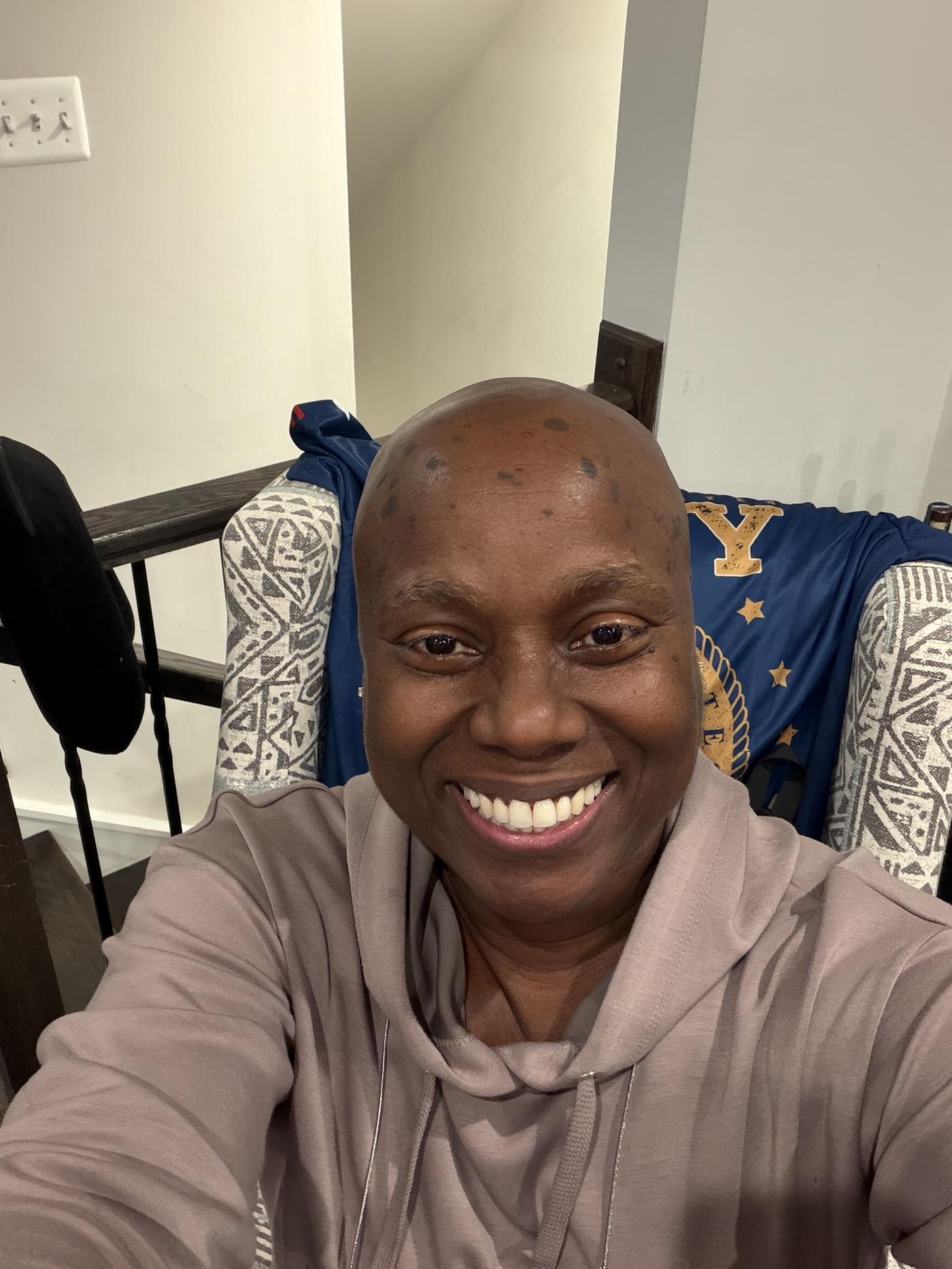
Geezell is a 26-year veteran of public service, solopreneur, and founder of Retired and Realizing. She's dedicated to helping retired public service professionals build joyful, empowered, purposeful lives on their own terms.