Is This Really My Life Now? What No One Tells You About the First Week of Retirement from Public Safety
Is This Really My Life Now?
What No One Tells You About the First Week of Retirement from Public Safety
By Geezell · Retired and Realizing
Nobody hands you a roadmap for the first week. Nobody sits you down before your last day and says — okay, here is what Monday morning is going to feel like. Here is what it will feel like in your body when you do not have to be anywhere. Here is what the silence actually sounds like after 26 years of noise.
They give you a card. Maybe a small gathering. And then the door closes behind you and the world just... keeps moving.
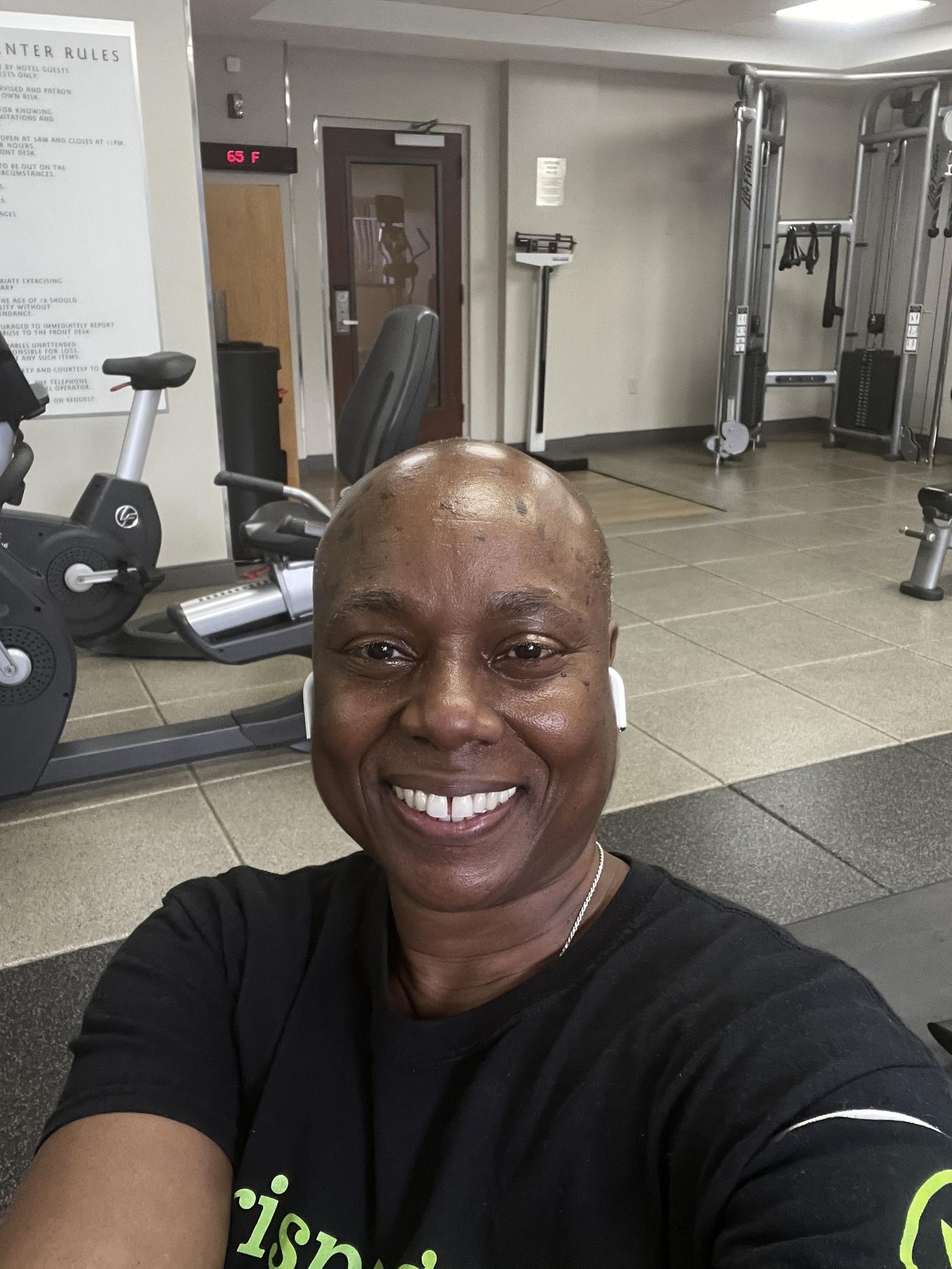
I am Geezell. I spent 26 years and 5 months in public safety — three years in NYDOC, the New York Department of Corrections, followed by 23 years in corrections in another state. And when I retired, I thought I was ready. I thought I knew what was coming.
I did not.
Is this really my life now? I said it with wonder. I also said it with something I did not expect — a little bit of confusion.
This post is for the person in their first week right now. The one sitting in the strange quiet wondering why freedom feels so unfamiliar. The one running unnecessary errands because staying still feels wrong. The one who gave everything and is now standing on the other side not quite knowing what to do with the space.
I see you. Let me tell you what I lived through — so you know you are completely normal.
Coffee, Wolff, and the Morning It Got Real
The very first morning of my retirement, my tuxedo cat Wolff tried to wake me up at 4:30 AM the way he always did on weekday mornings. Same cat. Same paw. Same schedule.
I snoozed until 7:00.
He was not happy about it. Wolff runs on a tight schedule and the audacity of me breaking the routine did not sit well with him. But while he ate his breakfast — on his timeline, not mine — I made a hot cup of coffee and took it out to the patio.
And that is when it hit me.
I sat there watching my neighbors hustle out to their cars. Loading bags. Checking phones. Starting engines. The whole familiar morning rhythm of people with somewhere to be. And I was sitting on my patio with a hot cup of coffee watching all of it — and I was not going anywhere.
Not because I was on vacation.
Not because I had taken a personal day.
Not because I called out sick.
Because I had retired.
Is this really my life now? I said it with wonder. I also said it with something I did not expect — a little bit of confusion.
That moment on the patio was the first real breath of it. And it was beautiful and disorienting at the same time.
Why Your Body Does Not Know the Career Is Over
Here is something nobody tells you before your last day: your nervous system does not clock out when you do.
For 26 years, I operated in high-alert environments. Corrections is not a career where you get to relax inside the building. You are always reading the room. Always scanning. Always eight steps ahead. Always managing something — whether it is a situation, a person, an institution, or your own emotions, which you had to keep tightly controlled because the environment demanded it.
You do not just turn that off.
The hypervigilance does not go away. That is the insane part.
Even sitting on a patio, even holding a coffee cup, even watching something as ordinary as the neighborhood waking up — your body is still on alert. Still scanning. Still waiting for something to require your attention.
In my first week, I could not keep still. I was running out to the supermarket for things I did not need. I was doing car maintenance, cleaning clothes, shredding papers, crossing things off lists. I was filling every hour the way I would fill a 48-hour window between shifts — like I had two days to handle everything before the system called me back.
But the system was not calling me back.
My body just had not gotten the memo yet.
You spent 26 years developing a nervous system that kept you safe inside those walls. Give it grace while it learns what safe looks like now.
If you are in your first week and you cannot sit still — if you are cleaning things that do not need cleaning and running errands that do not need running — that is not a problem. That is your body doing what it was trained to do. It kept you safe for decades. It does not know yet that the landscape has changed.
It will learn. But it needs time. And it needs grace.
And Then Nobody Needed Me for Anything
My partner works from home. So in my first week of retirement, while she was heads-down working, Wolff had been fed, the coffee was finished, and the unnecessary errands were done — I sat with something I was not expecting.
Nobody needed me for anything.
After 26 years of being essential — of showing up being the thing the whole system counted on — I was suddenly optional. And even though I had earned that, even though that was the whole point of retirement, something in me sat with that reality and felt it.
That is grief. And it is real. And it is okay.
The career was not just a job. It was identity. It was structure. It was a built-in community of people who understood your world without needing an explanation. When you walk out that door, you lose all three at once — the purpose, the rhythm, and the people.
Nobody gives you a parade for that. No ticker tape. No public recognition. Corrections officers retire in silence while the world keeps moving. And the grief of that — the grief of 26 years walking out the door and the world not stopping — is real and it deserves to be named.
You are allowed to grieve the career even if you are glad it is over. Both things are true at the same time.
The grief does not mean you made the wrong choice. The grief does not mean you are not ready. The grief means you gave something real and it mattered and your body knows it.
What the Career Actually Cost — The Things You Missed
In public safety, the calendar belongs to the institution. You do not decide when you show up. You do not decide when you go home. And you definitely do not decide which moments in your personal life you are able to be present for.

Funerals.
Birthdays.
Gatherings.
Those are the moments the career took. Not just days off — irreplaceable moments. The ones where your absence was not a choice but a cost. Where you sat inside those walls while something happened in your real life that you could not get back.
One of the first things I realized in that first week — one of the things that shifted my mindset completely — was that I could now just go.
Stay with Mom in New York for weeks if I wanted to. No request forms. No shift coverage to arrange. No explaining myself to anyone. My family, my time, my call.
That realization — that the time was finally mine — was one of the first moments the retirement started feeling less disorienting and more like what it actually was: freedom.
The Moment the Mindset Flipped — Day 6 or 7
By the end of that first week, something shifted.
It was not dramatic. It did not happen all at once. But I started doing a different kind of accounting. Instead of counting what I had left behind, I started counting what I had gotten back.
Laughter. Real, unguarded laughter. Because in corrections, you do not walk in smiling. You do not walk in jolly. The environment does not allow for that — and over time you stop reaching for it even when you are not inside those walls.
Singing. I had sung in every mirror in the house before corrections. Bathroom acoustics were my favorite. In the shower, while getting ready, just because it felt good. The career quietly took that from me. Not all at once. Just gradually. The jolly got suppressed, the singing got suppressed, and one day you look up and you have not belted out an oldie in years.
And the first week of retirement, I sang. With no alarm coming. With no shift on the other side. With no time restraint. Just free, unhurried, joyful singing — and it felt like reclaiming something I had not even realized I had given away.
I don't have to keep my jaws clenched anymore. That was the realization. Six words. Twenty-six years of what corrections costs a person — and what comes back when it is finally over.
The jaw unclench is real. If you know, you know. That constant controlled expression — the face you put on inside those walls, the containment of every reaction — it lives in your body. And when the career is over and the containment is no longer required, something physically releases.
By day seven, I knew I could settle into this next chapter. Not because the adjustment was complete — it was not. But because I could feel, for the first time, what was waiting on the other side of the disorientation.
Your People Are Already Waiting for You
One of the most important things that happened in my first week of retirement was not something I did alone. It was a dinner with a retired colleague who had gotten to the other side before me.
We sat down to eat and she leaned back and said:
"Rob, how does it feel?"
Not rushed. Not instructional. Just... waiting. Genuinely curious. Already knowing the answer because she had lived it.
I said:
"Yeah boo, I like this. Yeah, I can learn to really like this."
And she had the look. The tone. The energy of someone who had been telling me this was coming and was now watching me figure out it was real.
That is what community does. That is what having your people on the other side of this transition feels like.
The hardest part of public safety retirement is that the work family — the only people who truly understood your world without needing an explanation — scatters the moment the career ends. They go home. You go home. And suddenly the people who got it are gone, and you are looking for them with nowhere to find them.
That is why the Retired and Realizing community exists. Because nobody should go through this transition alone. Because your people — the ones who lived what you lived — should be somewhere you can find them.
What I Want You to Know If You Are in Your First Week Right Now
The weird stillness is normal.
The unnecessary errands are normal.
The grief is normal.
The hypervigilance that does not know the career is over — completely normal.
The flash of joy that surprises you — that is normal too.
You gave 20, 26, 30 years to public safety. You showed up inside walls most people will never see, carrying weight most people will never understand. You managed situations that would break people who had not been trained the way you were trained. And you made it to the other side.
The adjustment is not linear. Some mornings you will feel completely free. Some mornings you will reach for the keys out of habit. Some days you will grieve the work family and some days you will belt out an oldie in the kitchen and not be able to stop smiling.
All of it is part of it.
What do you want to do? What is it that you love? What makes you happy? Let's do it. Let's go.
That is what I would say to you sitting in that first week. Not a motivational poster. Not a five-step plan. Just a retired public safety veteran who made it through the weird stillness, sitting across from you, saying:
Sweetie, it's okay. You have options. Decide which ones you want to do — and let's go.
Come Find Your People
The Retired and Realizing community was built for exactly this moment — the first week, the first month, and every chapter of this transition. Real talk. Real people. No one has to explain the job here.
Follow Geezell on TikTok for daily content about life after public safety. And come home to the Retired and Realizing community — where your people are already waiting.
About Geezell
Geezell is a 26-year veteran of public service, solopreneur, and founder of Retired and Realizing. She's dedicated to helping retired public service professionals build joyful, empowered, purposeful lives on their own terms.